
Field Guide · Railings
Iron vs. Cable Railings
Two systems, two very different jobs. Here is the difference — drawn, measured, and photographed from our own Colorado Springs installs.
Pick iron when
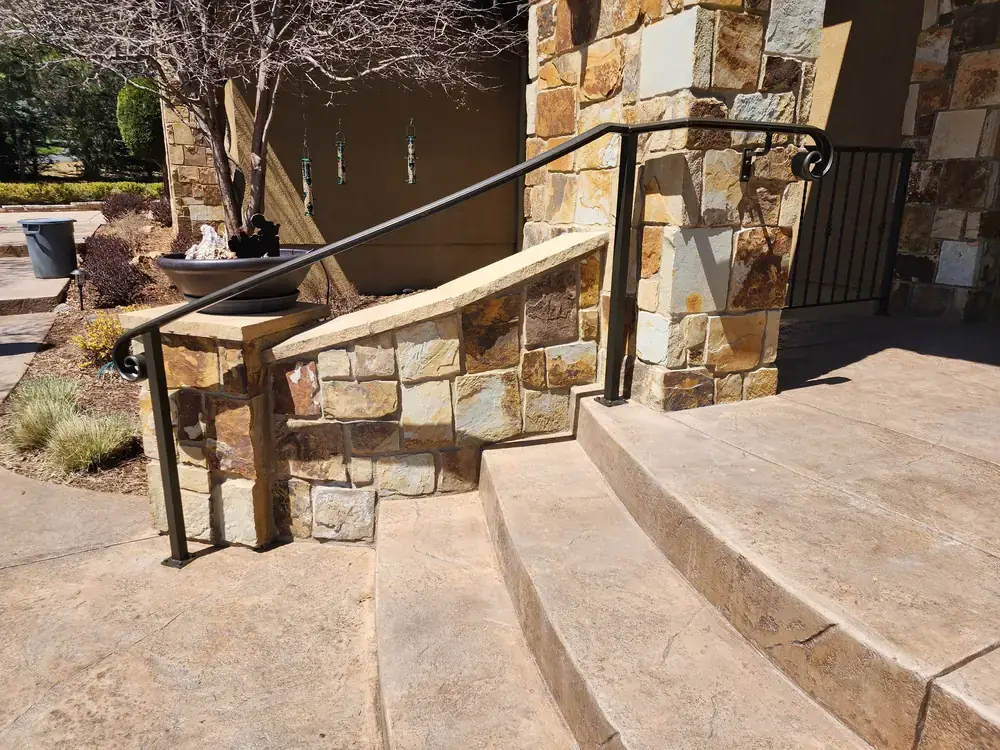
You want detail, mass, and a railing that reads as architecture. Traditional homes, grand stairs, ornate gates and balconies.
Pick cable when
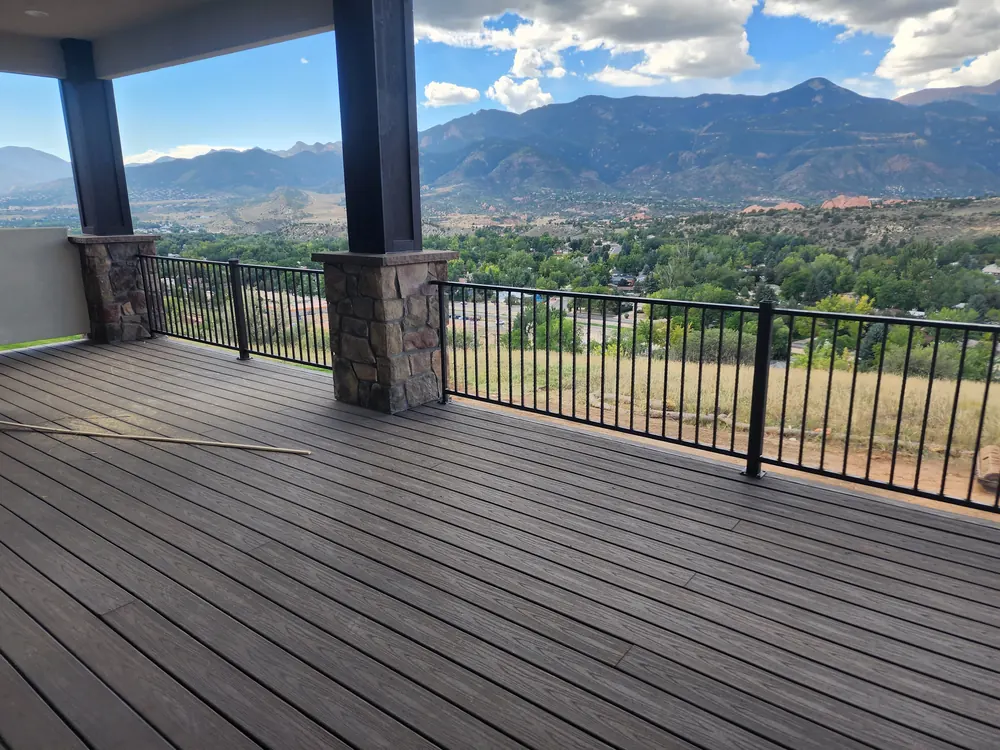
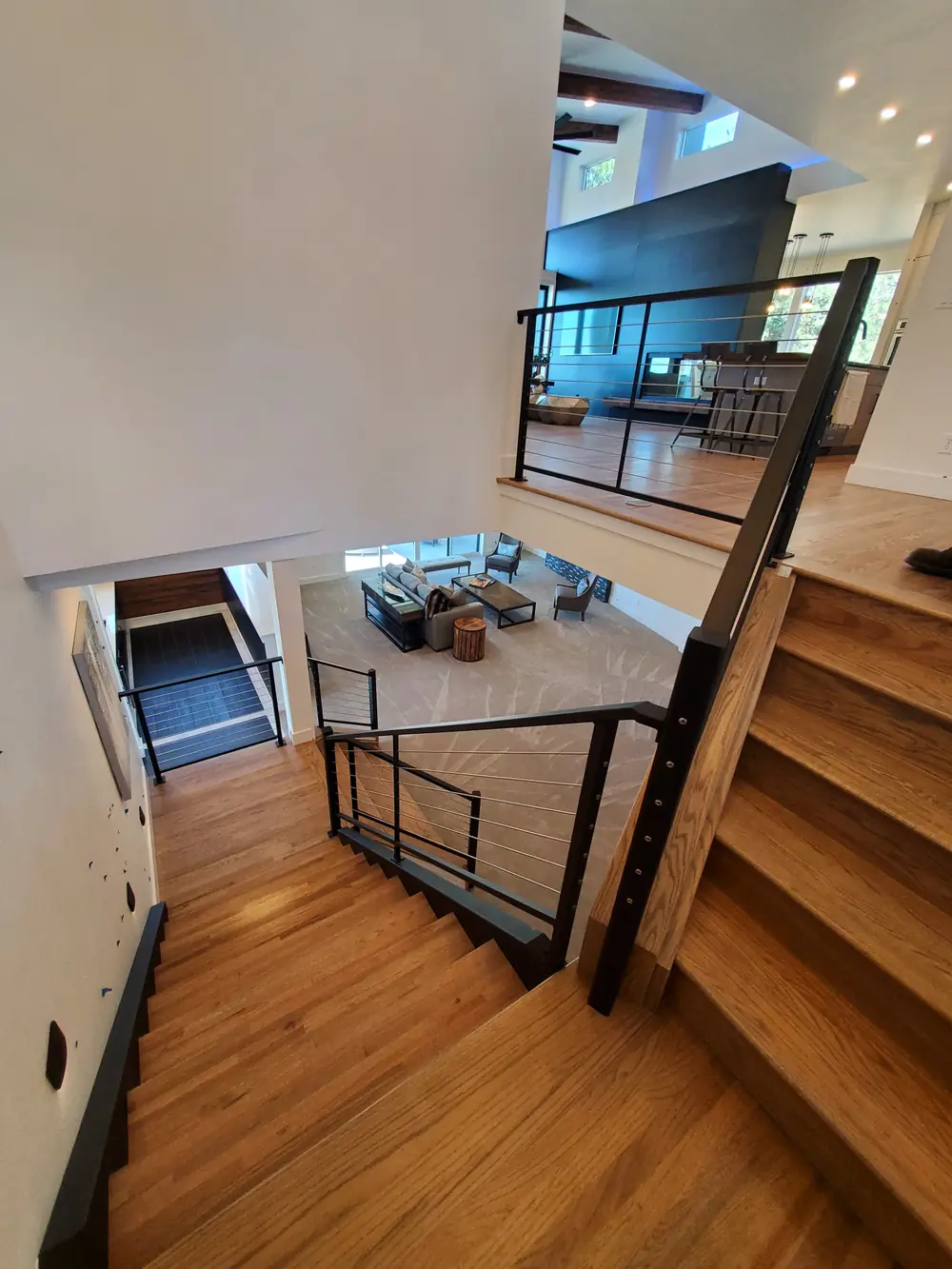
The view is the point. West-facing decks, walkout balconies, modern interiors with open stairwells.
Pick both when
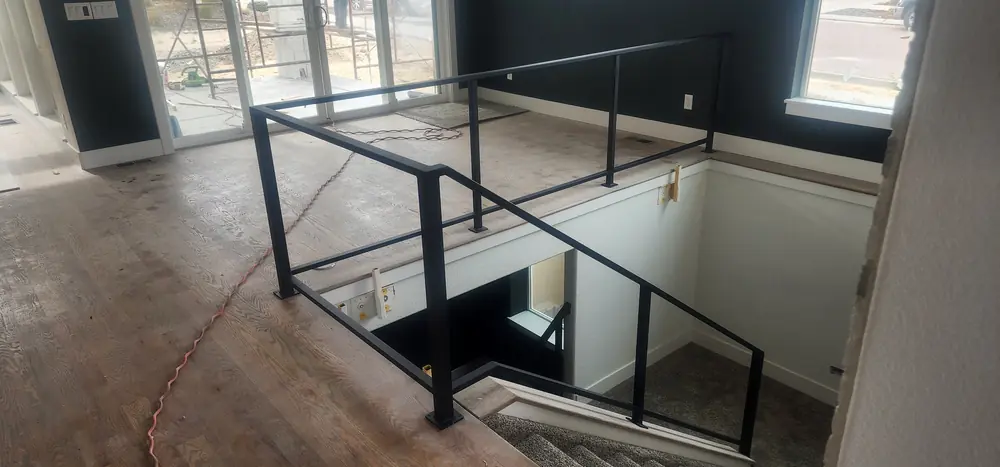
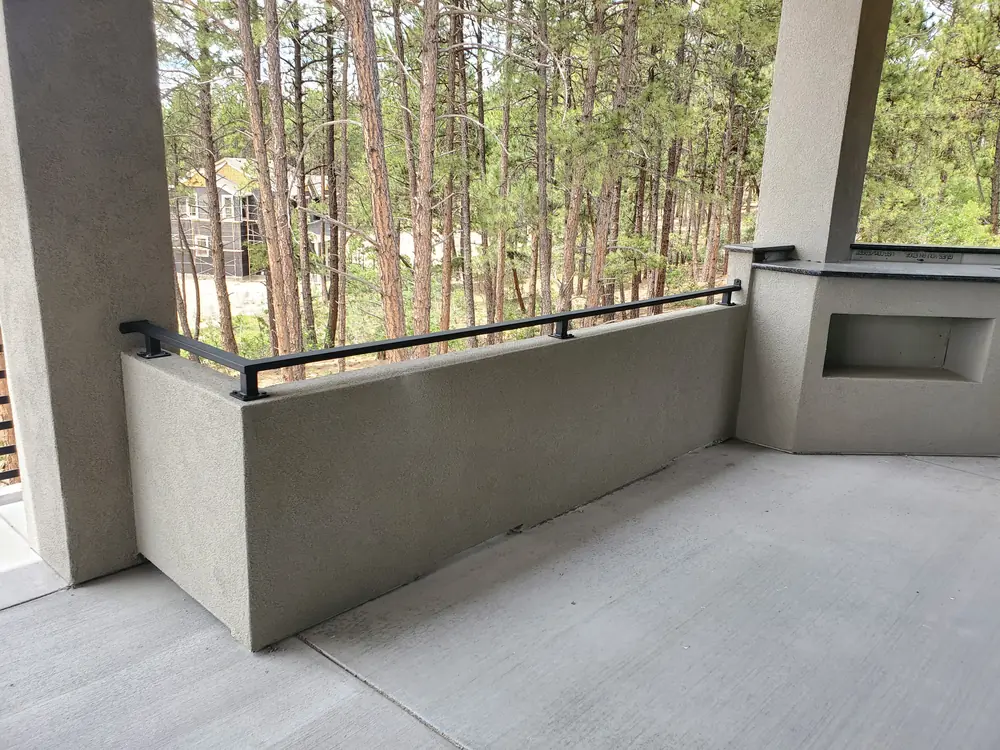
Steel posts and top rail with cable infill — the most-ordered railing in our shop this year.
Anatomy of each system
Same 8-foot run, drawn to the same scale. The differences are structural, not cosmetic.
Iron baluster railing
Load is carried by the frame. Balusters are welded top and bottom, so nothing moves and nothing needs adjusting later.
Cable railing
Load is carried by tension. End posts take several hundred pounds of pull, so they must be engineered and anchored accordingly.
What you actually see
At a seated eye level of about 44 inches, half-inch balusters on 4-inch centers remove roughly a quarter of the horizon. Eighth-inch cable removes a fraction of that.
On a deck facing the Front Range, that difference is the whole conversation. Indoors, on a stair with no view to protect, it usually is not.
The code numbers that decide the build
- 36"–42" guard height for residential decks and stairs.
- 4" sphere rule — no opening may pass a 4-inch sphere.
- ~3" practical cable spacing, because tensioned cable deflects under a push.
- 4' max post spacing on cable runs to limit that deflection.
- 200 lb concentrated load at the top rail, any direction.
Every run we fabricate is detailed in CAD against these numbers before a single cut is made.
Side by side
Swipe to compare
| Criteria | Iron | Cable |
|---|---|---|
| View retention | Interrupted every 4" | Nearly uninterrupted |
| Design range | Scrollwork, pickets, panels, custom motifs | Minimal, linear, modern only |
| Maintenance | Repaint or re-coat every 8–12 yrs | Re-tension cables every 1–2 yrs |
| Cost per linear foot | $95 – $190 installed | $150 – $260 installed |
| Wind & snow load | Rigid, no deflection | Rigid posts required, cables flex |
| Child safety | Vertical — not climbable | Horizontal — climbable if untensioned |
| Interior stair fit | Classic through contemporary | Contemporary and loft-style |
| Repairability | Weld and re-coat on site | Replace cable run + terminals |
How they score
The hybrid most clients choose
Fabricated steel posts and a continuous steel top rail, with tensioned cable infill between. Iron's structure and detail where you touch it, cable's transparency where you look through it.
 See our railing work
Questions we get every week
Is cable railing code compliant in Colorado Springs?
Yes, when it is built correctly. Cables must be spaced so a 4-inch sphere cannot pass, which in practice means roughly 3 inches on center once tension and deflection are accounted for. Posts must be structural and spaced no more than about 4 feet apart, and the assembly must resist a 200 lb concentrated load at the top rail. We engineer every cable run to those numbers before we cut steel.
Which lasts longer in Colorado weather?
Both last decades when built right. Powder-coated iron holds up extremely well at altitude and can be re-coated indefinitely. Stainless cable will not rust, but the cables need periodic re-tensioning as the structure settles and temperature swings work on the runs.
Can I mix the two?
This is our most requested railing right now: iron or steel posts and top rail with cable infill. You get the mass and detail of fabricated steel with the open sightline of cable. It is also usually cheaper than an all-cable system with premium posts.
Which one is better for a deck with a view?
Cable, almost every time. On a west-facing deck with Pikes Peak in frame, cable infill removes roughly 20% of the visual obstruction that vertical balusters create at seated eye level.
Which is better for a family with young children?
Vertical iron balusters. Horizontal cable can be climbed like a ladder if it loses tension. If you want cable with small children in the house, we tighten spacing and specify heavier posts.
Ready to Bring Your Vision to Life?
Get a free, no-obligation quote from Colorado Springs' premier metal fabrication specialists. 30+ years of craftsmanship, one phone call away.
Est. 1996 · Owner-operated · Colorado Springs, CO